

The Balkans has always been on my travel wish list and I finally fulfilled that wish this September when I jumped on a flight to Tirana, Albania. The flight from London was surprisingly quick and the border control was efficient and simple – given Albania is not yet a member of the EU. The harmonious blend of religions seen in the Mosque-Churches makes Albania unique, but later we would discover that the Venetian influence on parts of the coast would feel oddly familiar.
Our Kirker private driver was at the airport to whisk me into the city (on smooth EU roads). I stayed at the Rogner Hotel next to the Parliament in the old town and took a guided tour, which is a must to soak up all the complex history of this multilayered city and bring it to life. I immediately felt how warm and welcoming people were, and how varied the architecture was, spanning Ottoman, communism and the country’s modern-day aspirations. The amount of green space in Tirana was a pleasant surprise.
Museum Bunker 1 gave fascinating insight into the paranoia of Enver Hoxha’s regime. It’s an underground hideaway now repurposed as an art and space of reflection for the victims of communism which would have the old dictator turning in his grave. Dinner was some wonderful local cuisine at Jarna restaurant, a recommendation from our guide. A drink afterwards in the atmospheric Millennium Garden was a great way to round off a Friday night.
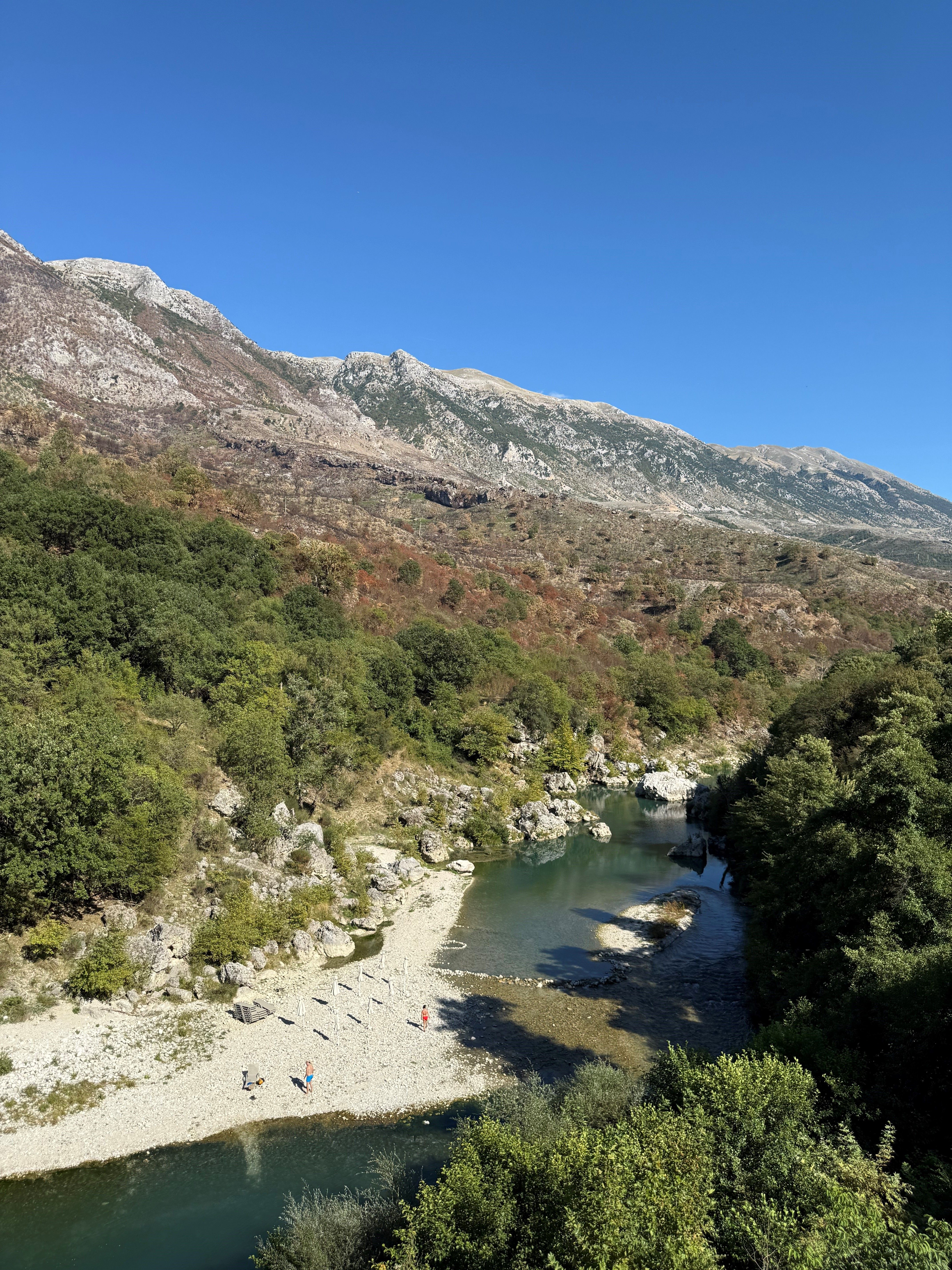
I travelled south with a private driver to the hilltop fortress town of Gjirokastër. A worthwhile stop along the way is Berat in the Osum river valley, known as the town of a thousand windows for it’s white ‘kulla’ style houses that were fortified with metres-thick walls to withstand sieges from invaders. Half an hour before reaching Gjirokastër, we stopped for a coffee at a spectacular location above a river overlooking dramatic mountains. The place was Hotel Uji Ftohte Tepelene, and guests can swim in the crystal-clear river canyon should they wish. Our driver facilitated a honey and olive oil tasting – both were intensely fragrant.
Gjirokastër is known for its 12th century castle and the more ominous birthplace of dictator Enver Hoxha, whose pastiche palace dominates one hill. The old town is impressive but do be aware that the town is built into a mountain and the lanes are steep and windy.
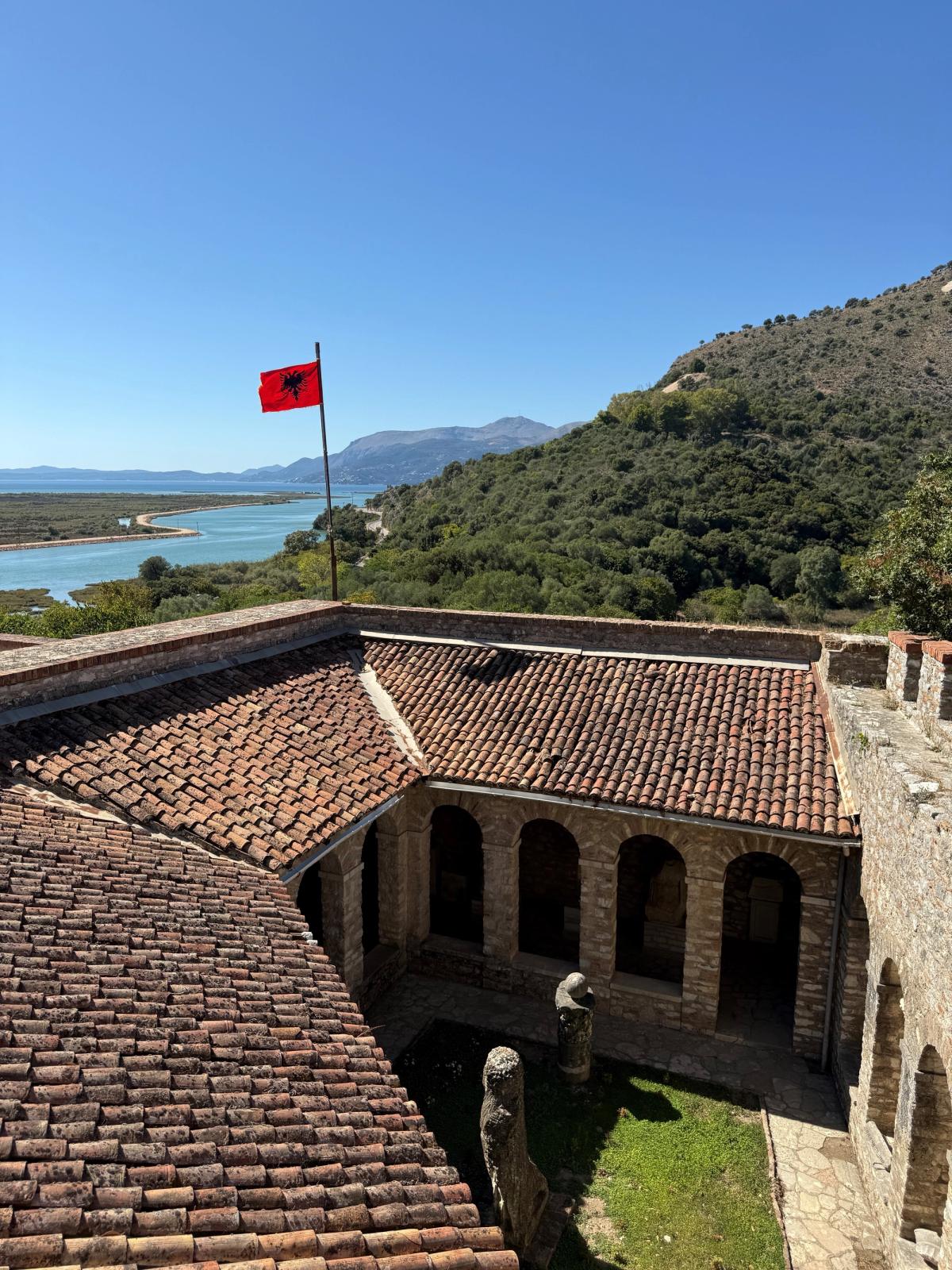
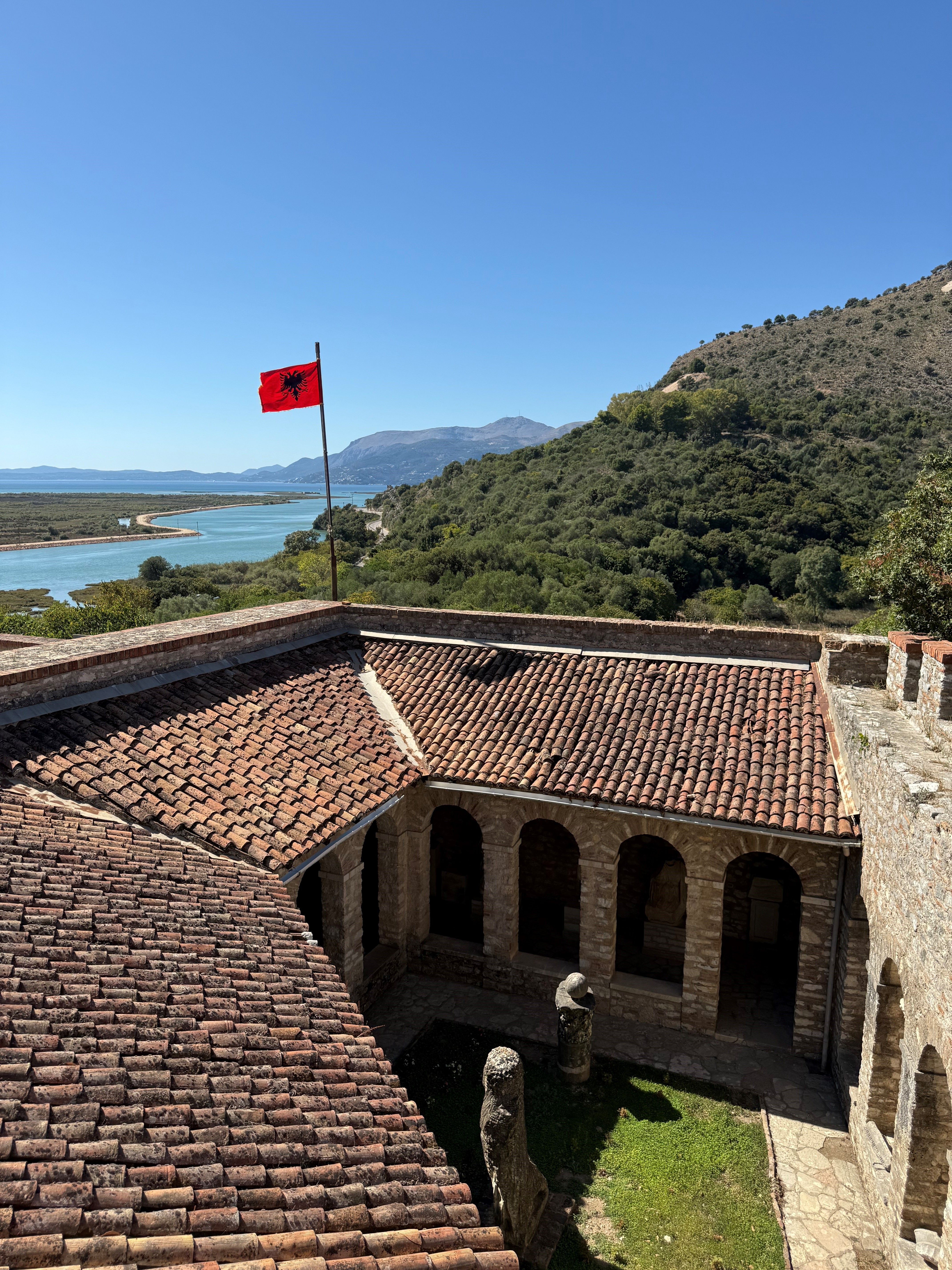
Sarandë was our next stop, further south and by the sea. From here the views of Corfu and the Adriatic sea were phenomenal. A highlight was the beach town of Ksamil and the ancient Greek colony then Roman settlement at Butrint, complete with an amphitheatre and temples. The archaeological park was quiet which gave us respite from the busy coastal.
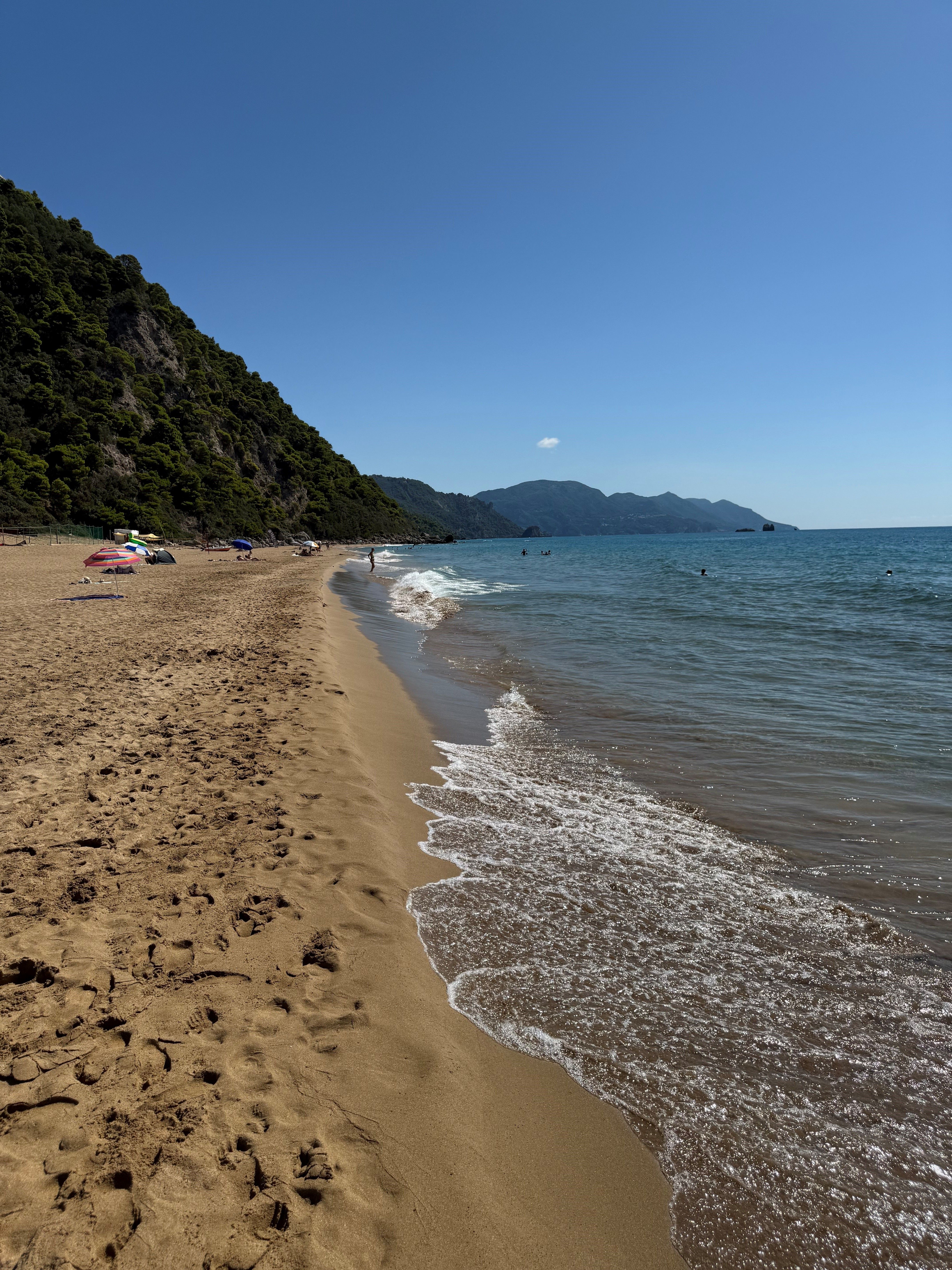
While other travellers were returning to the UK from Sarande, I was smug in the knowledge that my trip had one final twist before flying home. From Sarande, I took a 50-minute ferry to Corfu and watched as Albania receded behind me. 24 hours on this Greek island was enough to hook me completely. The food, the quality of light, the azure water and hidden beaches were unimaginable. I met up with some Kirker colleagues who were in Corfu, and we all went for a lively dinner on a panoramic terrace over the Agios Georgios bay. Over sunset drinks and a fabulous dinner we shared out adventures.
On my next visit to Albania, I plan to visit the North, including Lake Shkoder, the Valbona valley and the Accursed mountains. Thanks to our wonderful partners, Kirker is now well-placed to combine South and North itineraries.