

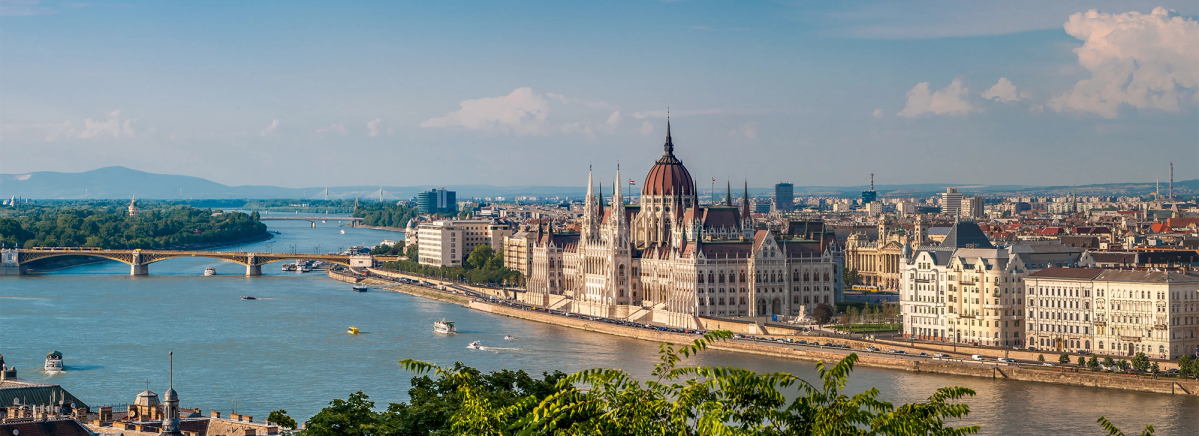
Perched on the bank of the Danube on the Pest side of the city, the Hungarian Parliament Building dominates the waterfront with its imposing neo-Gothic architecture and impressive size. It was built over 17 years at the end of the nineteenth century during a period of economic prosperity which saw the inauguration of Nyugati Railway Station and Heroes’ Square. This was a massive undertaking, and no expense was spared during the construction: 40 kilograms of 22-23 carat gold was used for the decorations. What is most striking for any British visitors when faced with its sprawling chambers and lofty towers, is the resemblance to the Houses of Parliament upon which it was modelled.
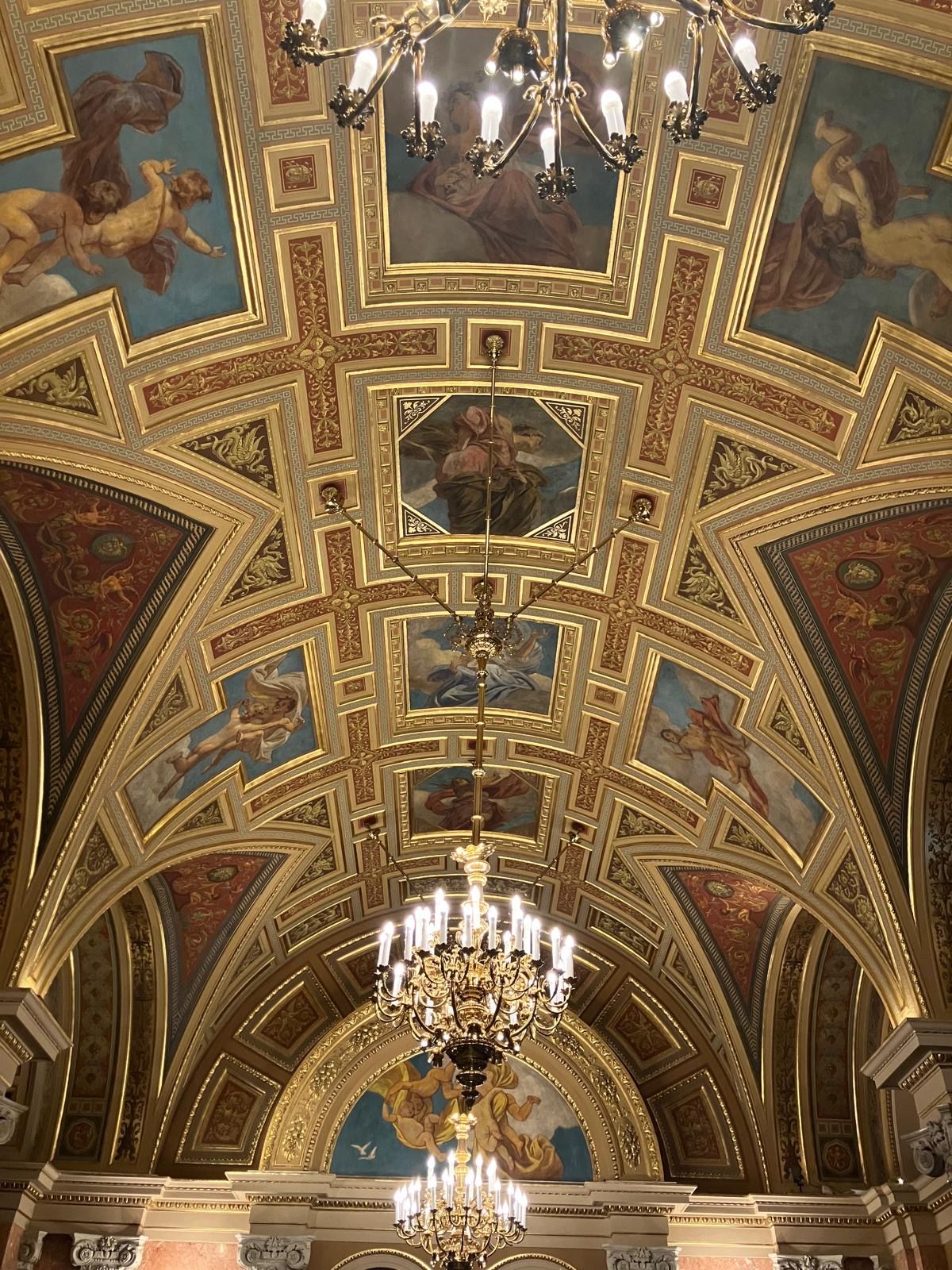
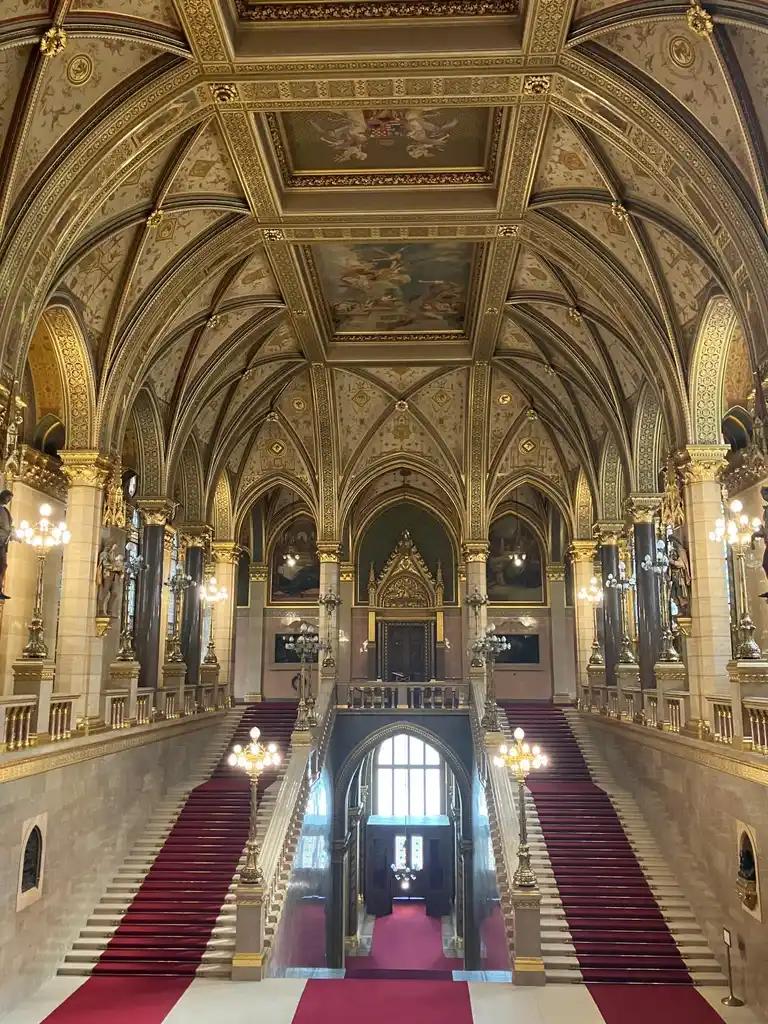
Visitors enter underground and are escorted up the gilded staircase to the main floor of the building. Gold-leaf covers the entirety of the ceiling and the intricate frescoes which decorate the archways detail Hungarian flora such as poppies. Traversing one the statue-lined corridors, we emerged into the Grand Stairway. This aptly named staircase connects the main entrance to the Dome Hall and is only used by the Parliament’s most distinguished guests. The grandiose arches are supported by four-tonne granite columns which were imported from Sweden and the stairwell is framed by exquisite stained-glass windows which represent works of art from the workshop of Miksa Roth.
The Dome Hall is the symbolic centre of the building where the Hungarian coronation regalia is kept. The crown, orb, sword, and sceptre occupy the centre of the room and are encircled in a glass case. Two members of the Crown Guard, a special unit in the Hungarian Armed forces, patrol the area outfitted in military uniforms with swords raised at attention. The crown is the focal point of the display and features two interlocking elements: a lower gold band of Byzantine origin and vertical gold bands depicting the apostles and Christ. On top of the Latin crown (as it is known) is a wonky cross, believed to have been damaged during seventeenth century. The hall itself is a quite a sight with its enormous domed ceiling which itself is not the full height of the building which ascends from 27 metres to its apogee of 96 metres tall.
From the Dome Hall guests cross through to the Lounge of the Chamber of Peers which is adorned with Zsolnay pyrogranite sculptures and lined with a large hand-knotted carpet. These decorations showcase both the innovation of Hungarian craftspeople and the pride taken in their traditions. Before entering the Chamber of Peers, we spotted cigar holders positioned for easy access under each window. The lore is that councillors would jettison their cigars before entering the chamber and return to find their specific specimen in its numbered slot. Home to Hungary’s representative National Assembly, the chamber is still in use today.
The visit terminates in the Bela Ney Hall where an exhibition focuses on the construction of the building which is represented by a 1:100 scale model. All visitors receive an audio guide in their respective language which gives an overview of each room as you pass through as well as the history of this remarkable landmark.
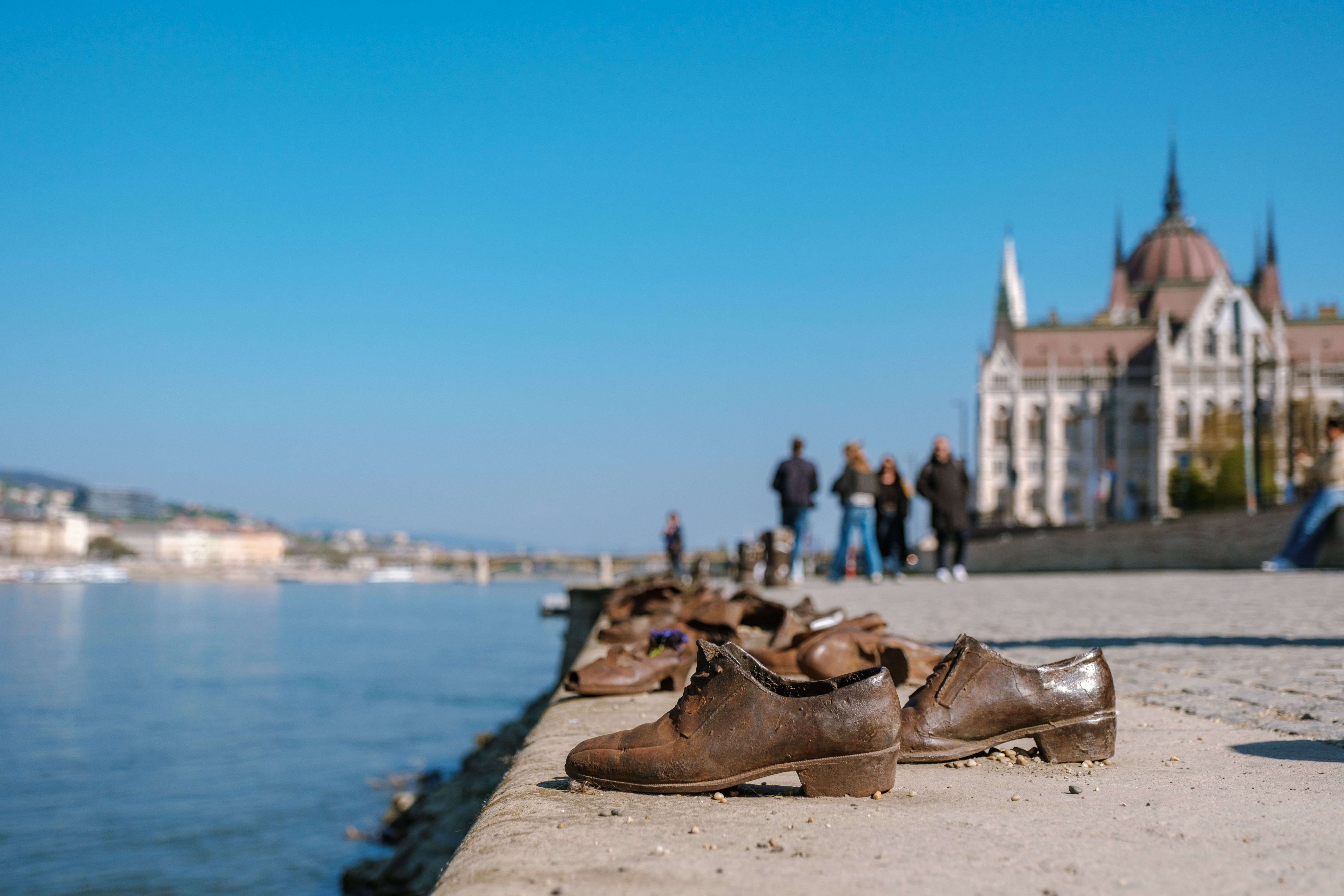
After finishing the tour, meander back along the river by the poignant Shoe Memorial which honours the Hungarian Jews who were killed during the winter of 1944 by the members of the antisemitic Arrow Cross Party. The sixty pairs of old-fashioned shoes bear testament to the reign of terror that followed the removal of Miklos Horthy from power, and the violence that took the lives of many ordinary citizens whose bodies were unceremoniously thrown into the river. The shoes are a variety of sizes and styles reflecting how this targeted violence affected children, men, women, and the elderly alike.