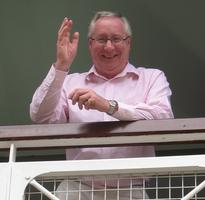


As we travelled through the region, my understanding of its history slowly grew. However, it wasn’t until our final day in Seville that I was truly able to appreciate the melting pot of cultures beneath modern day Spain, and all thanks to a morning spent with our guide, Fran.
Fran met us at our hotel at 9am – an earlier start is a necessity when visiting Andalucia in the peak of summer. A very quick stroll from the Casa 1800 led us to Seville’s Cathedral, where he explained how the Moors conquered the city in 711 AD, transforming it into a centre of Islamic culture.
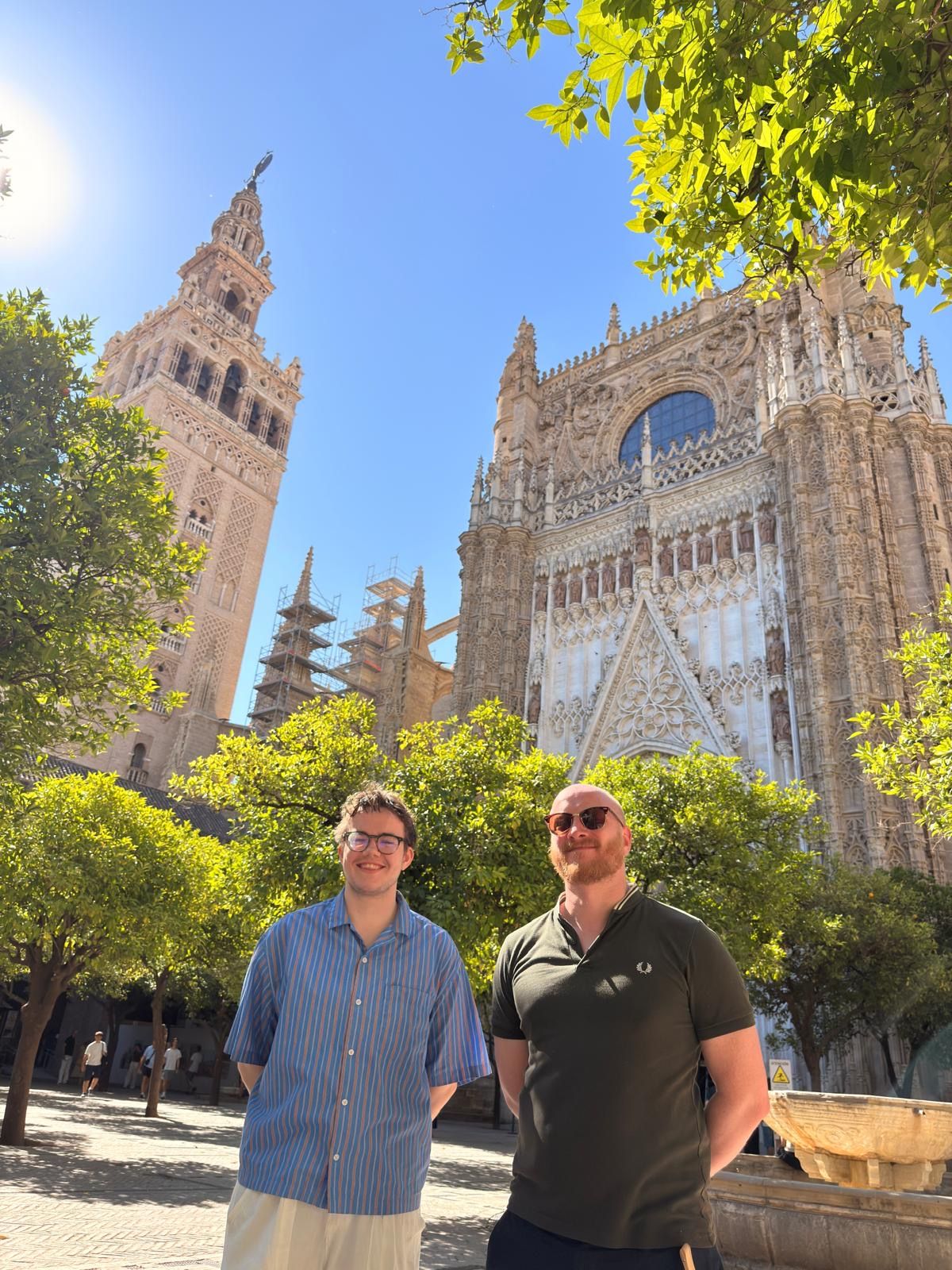
We walked right into the Cathedral with Fran, thankfully skipping the long queue in the sun. Originally a mosque, this is the world’s largest Gothic cathedral, which is hard to conceptualise until you’re inside. We started by making the pilgrimage up to the top of the 104-metre tall Giralda tower, now the Cathedral’s bell tower. However, the Muslim origins remain: we climbed the 34 floors by ascending ramps rather than stairs and learnt that this allowed a horse or mule to carry the Muslim crier to the top and give the call to prayer.
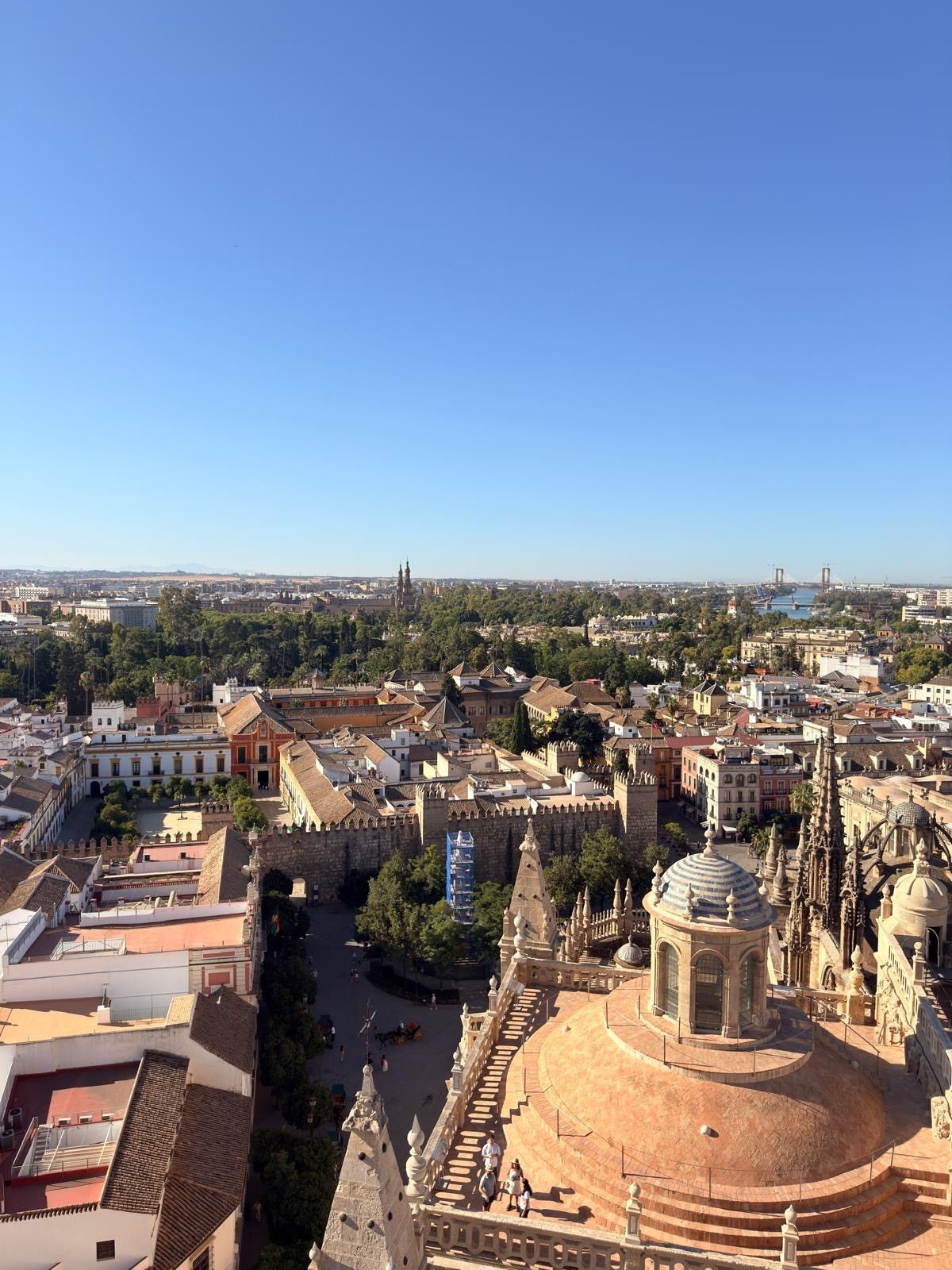
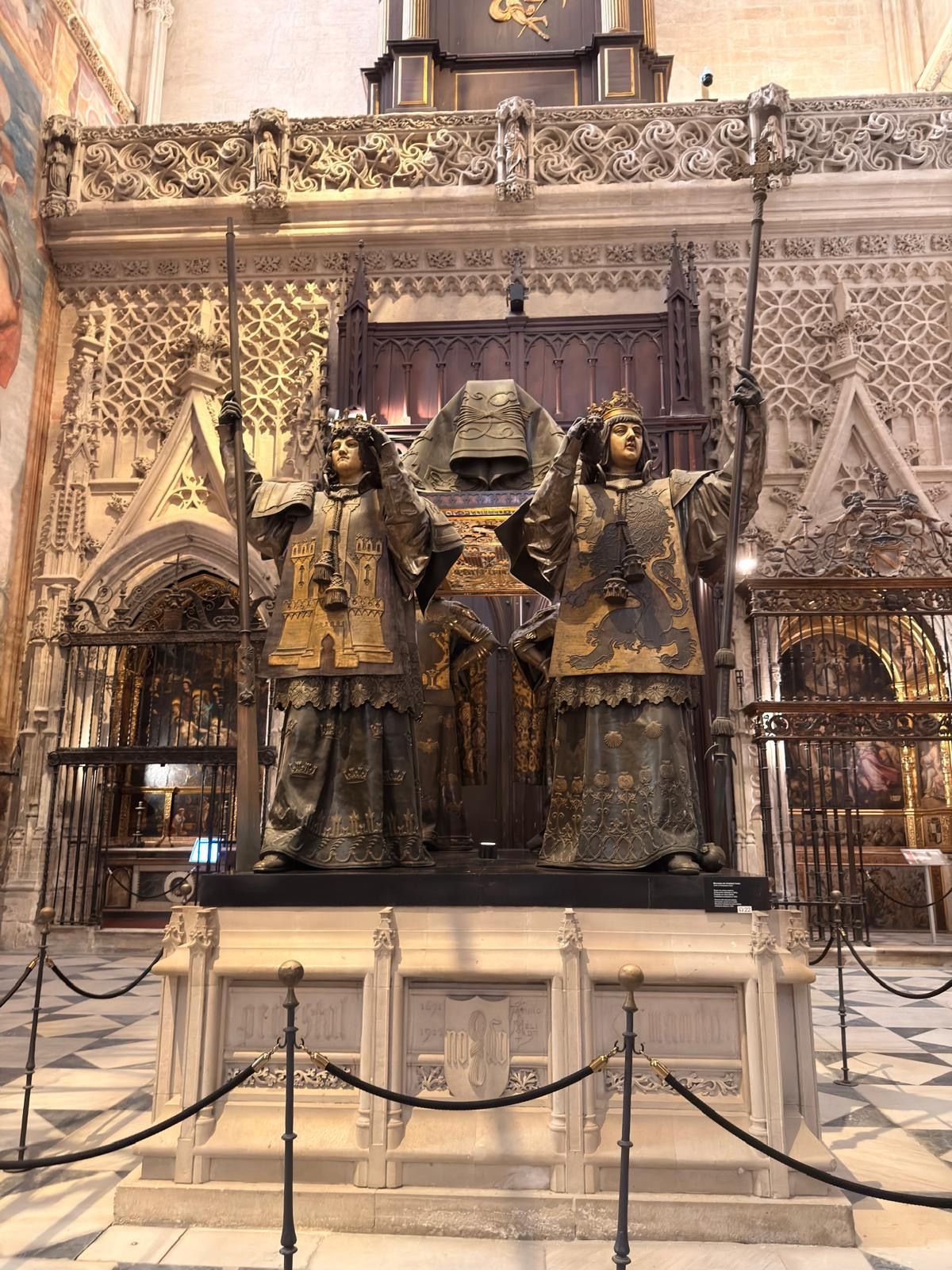
Returning to the main interior, Fran selected his highlights to show to us, including the world’s largest altarpiece, the Patio de los Naranjos and the tomb of Christopher Columbus. One could easily spend an entire day inside the Cathedral, so with our limited time, having a guide proved to be crucial.
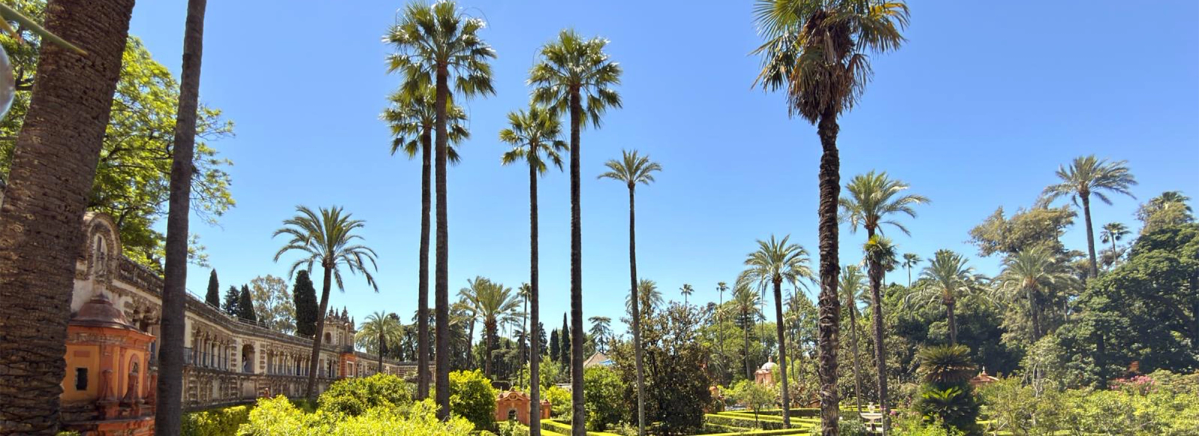
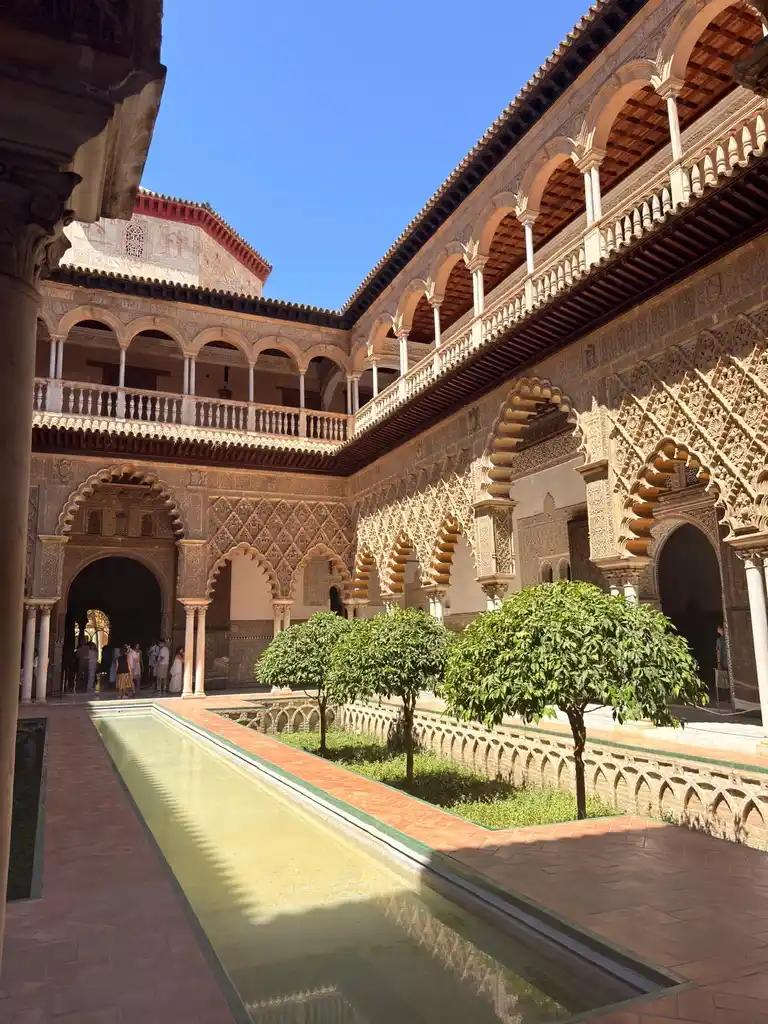
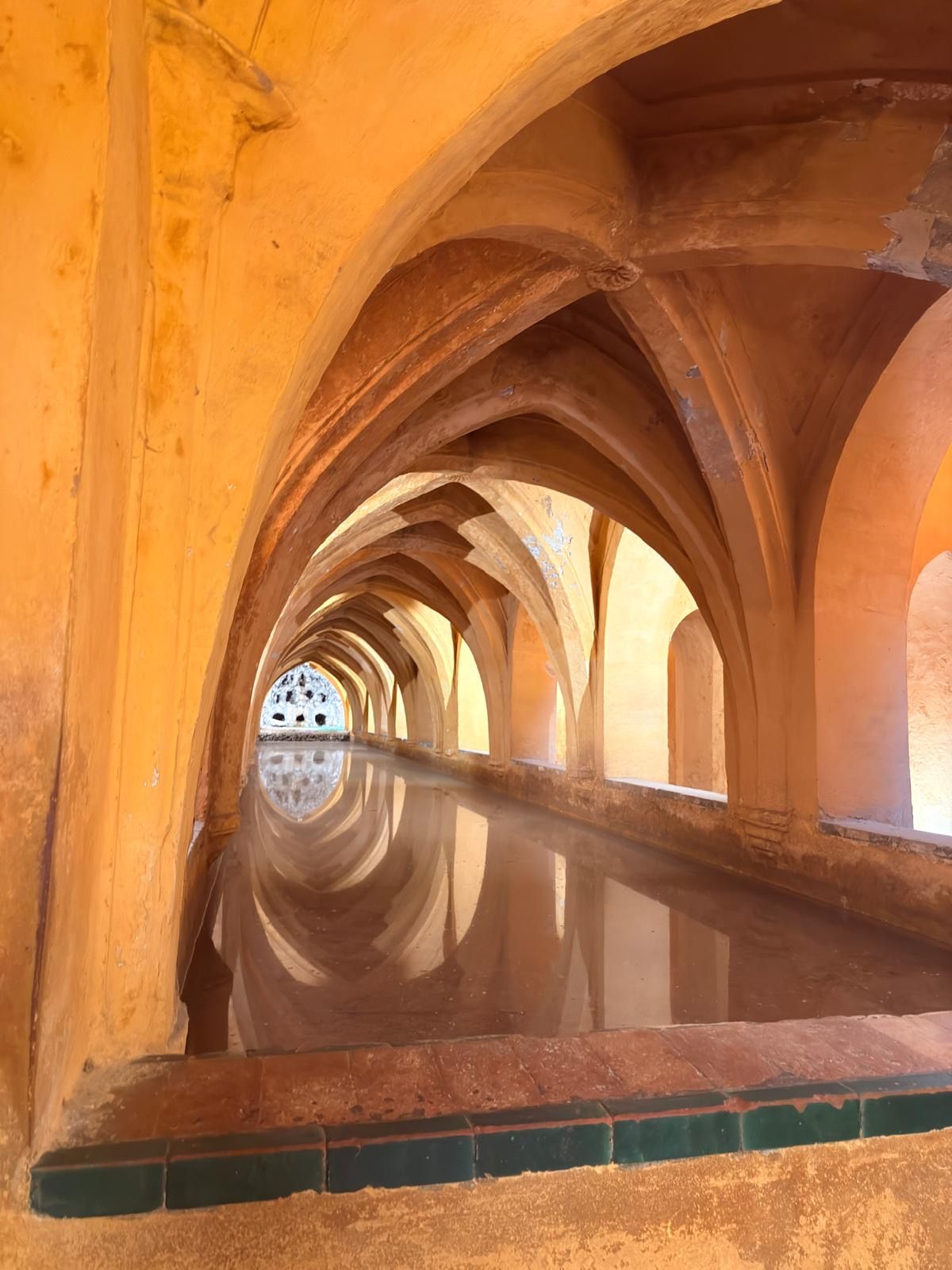
While the Cathedral is imposing in the city centre, I found the Alcazar and its grounds deceptively expansive. It is Europe’s oldest continuously inhabited royal palace, originally built as a Moorish fortress (and perhaps now more recognisable from Game of Thrones…) The blend of cultures and architecture is incredible, and it’s hard to convey the level of the craftsmanship behind the azulejo tiles found within the many halls and courtyards.
Within the Alcazar, we were fortunate enough to visit the Royal Bedrooms, where the Spanish Royal Family stay today while visiting Seville. Fran couldn’t join us within, so we were given audio guides and led through the quarters. I found the Prince’s Bedroom especially stunning, with the geometric carvings on the ceiling meant to mimic a starry sky.
After a suitable exploration of the palace itself, we ventured out into the midday sun and sprawling gardens.
Fran first led us to the Mercury Fountain, featuring a statue of the Roman god of commerce. Under Catholic rule, the Alcazar became the base for the Spanish House of Commerce, managing all 16th-century trade. Alongside Mercury, Fran pointed out that throughout the grounds and even the city, you will always find Roman columns in pairs rather than alone, symbol of Hercules’ legs as he towers over the city. Hercules is an unlikely symbol of Andalucia and even considered the mythological founder of Seville.
After a final wander through one of the garden’s mazes, Fran bid us goodbye. His parting gift was plenty more recommendations for our afternoon in Seville, including local tapas bars and sights to see. After a morning jam-packed with fascinating history lessons, I have to admit I was more than ready to sit down for a relaxing café con as-sukkar.