

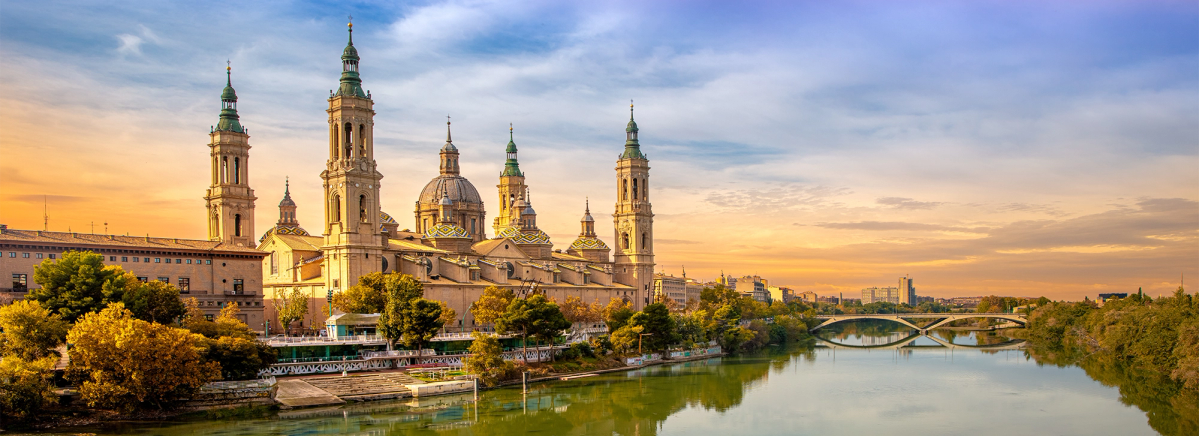
Only an hour and half by train, Zaragoza sits to the north-west of Barcelona at the foot of the Pyrenees and is a key access point to the wine regions of Aragon. Despite remaining relatively undiscovered by British tourists, the city is bustling and lively with a distinctly local feel. However what is most impressive about Zaragoza is its architecture and its varied and interesting cultural history resulting from its earlier occupation by Romans and later seizure by the Moors. Its previous inhabits have left their mark on the city in myriad ways with its Roman walls, bridge, and theatre still visible, and the Mudejar architecture of Aljaferia Palace and the Torre Nueva or Leaning Tower of Zaragoza (now dismantled).
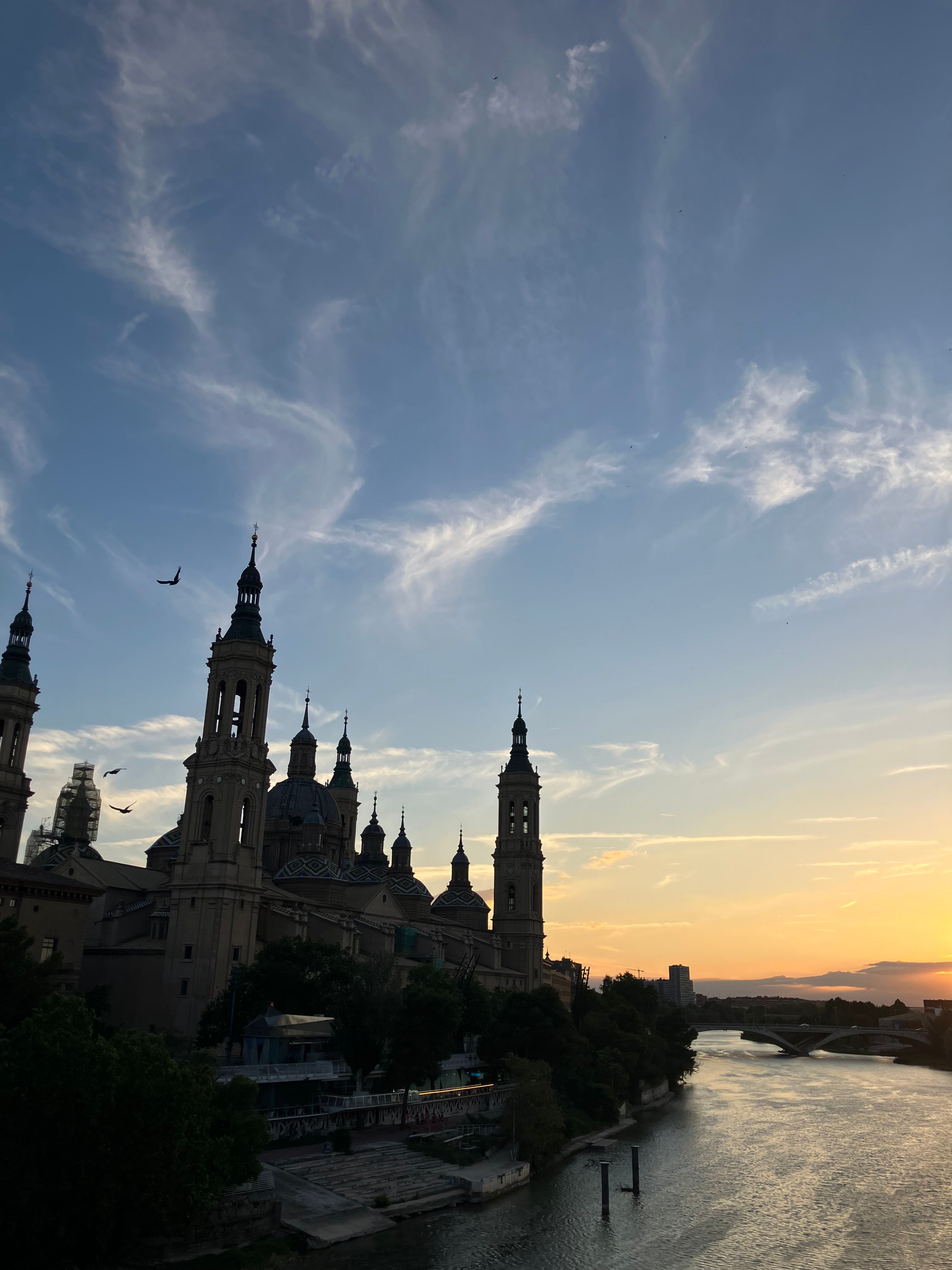
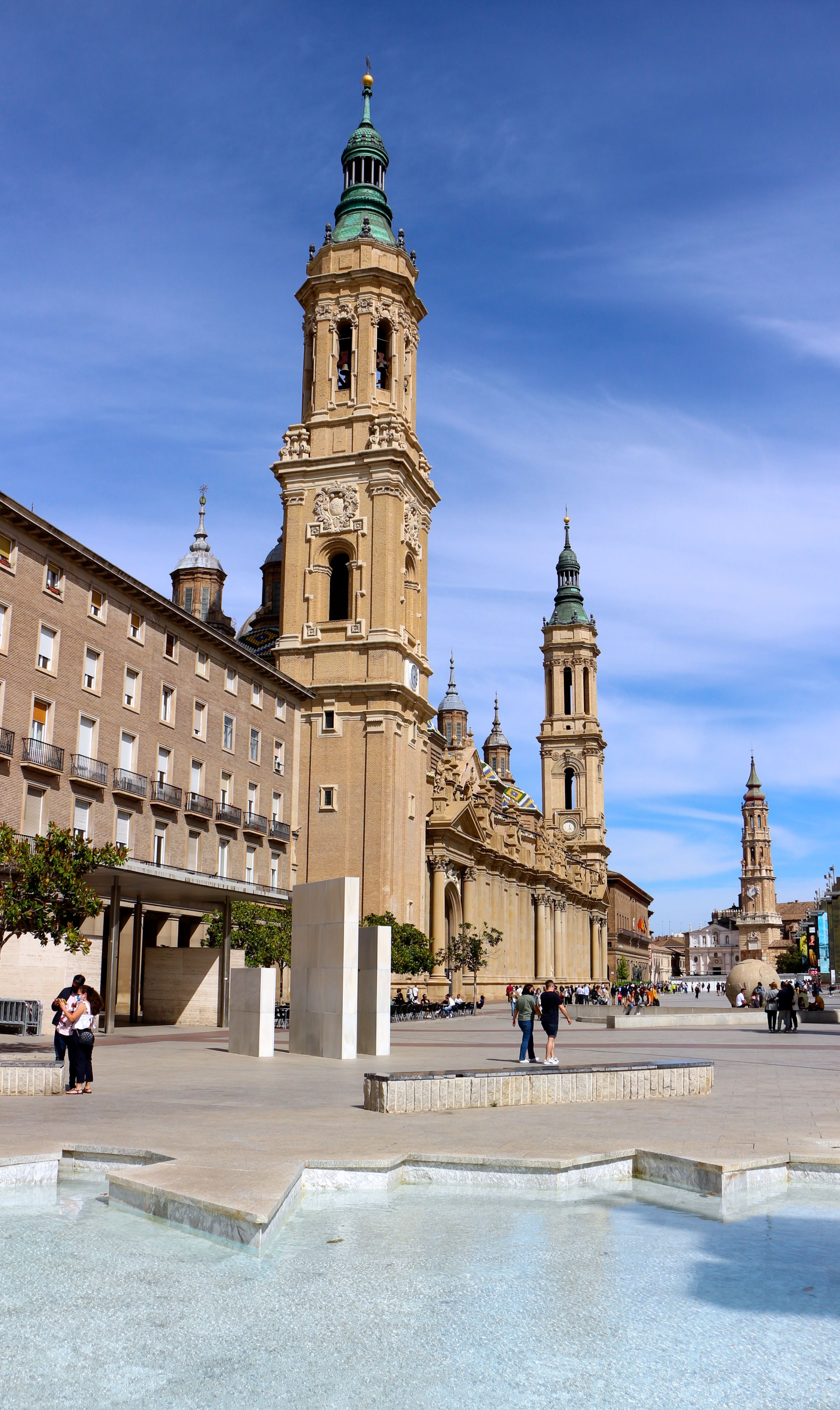
Two Cathedrals compose Zaragoza’s skyline: Cathedral-Basilica of Our Lady of the Pillar and Cathedral of the Saviour. The former is the most famous historical site in the city and still an object of pilgrimage. It is dedicated to the Virgin Mary who appeared to Saint James, offering him a pillar which he could use to build a church and thus help spread Christianity. The original pillar is still on display in the church and is covered by a cloth which is changed every day – it has over 370 ‘outfits’ including ceremonial ones for special occasions. While there, it is worth climbing to the top of the tower (a lift handily takes you most of the way) where the panoramic views over the city are breathtaking. The Cathedral of the Saviour, the city’s second cathedral, is built on the site of the ancient Roman forum and the former main mosque. This heritage is reflected in its decoration: Gothic, Mudejar, Renaissance, and Baroque. Local legend has it that Pedro de Arbues, the head of the Aragonese Inquisition, was assassinated in the cathedral in 1485 while praying. Although he was deeply unpopular, the local Jewish population was blamed for the attack and as a consequence 9 families were executed and many others fled.
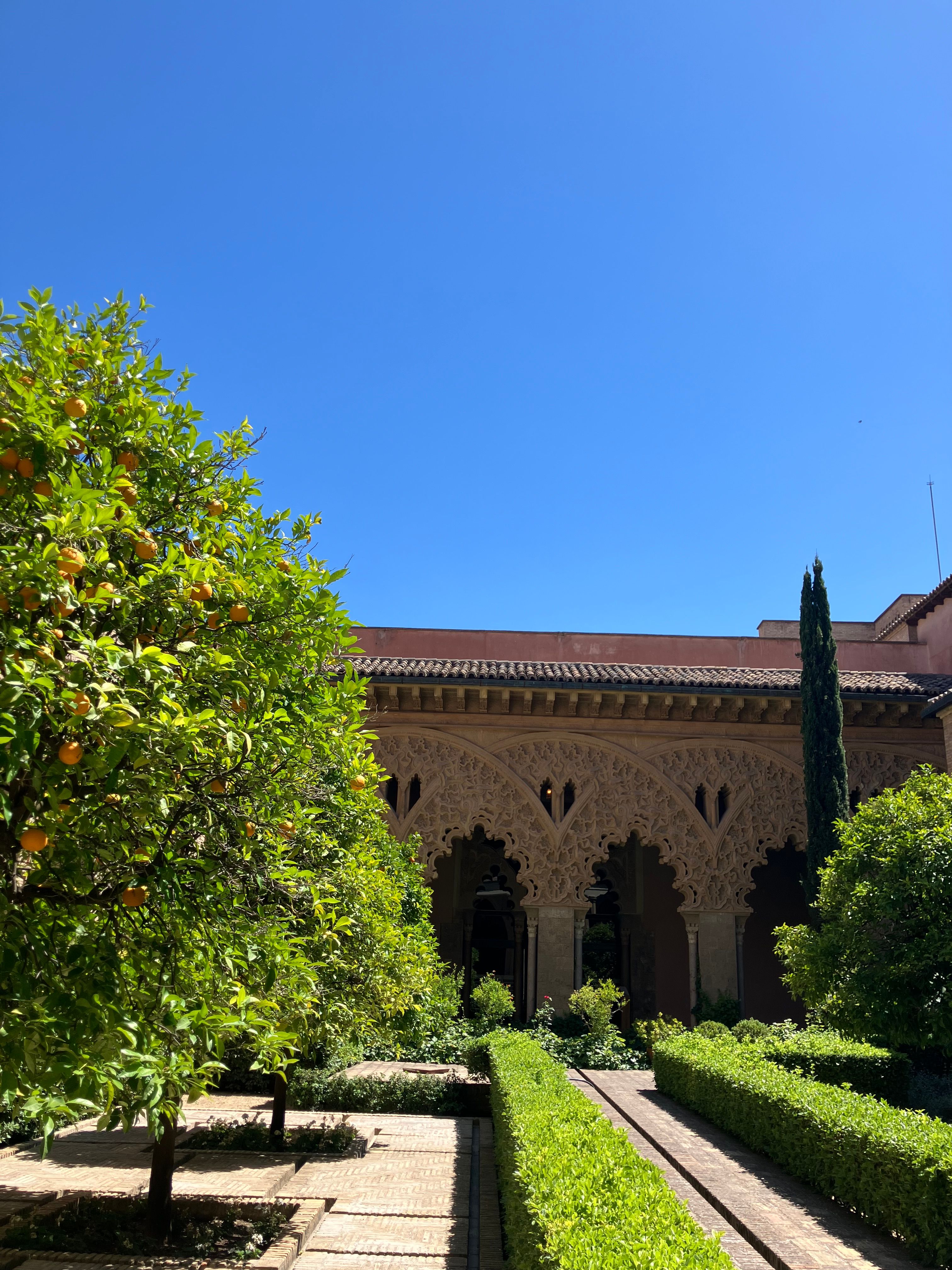
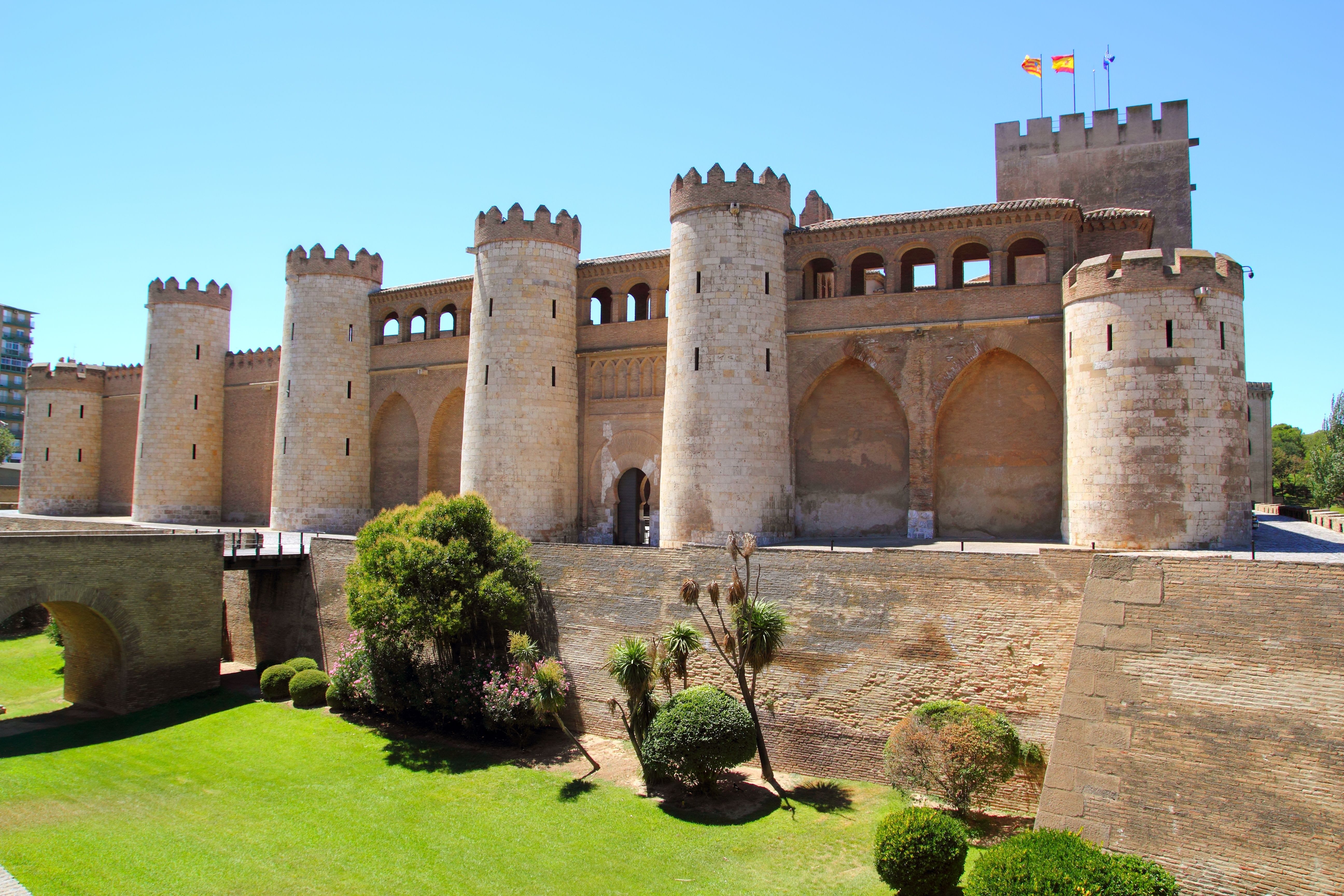
Nowhere is this mixed cultural history more apparent than the Aljaferia Palace which has been formerly a fortified enclosure, Aragonese royal residence, headquarters and prison of the Inquisition, palace of the Catholic Monarchs, army barracks and, since 1987, the headquarters of the Courts of Aragon, the current Parliament. It was built in the eleventh century as the ‘Palace of Joy’, a recreational palace for the Muslim kings who ruled the Taifa of Sarakusta. After the reconquest of Zaragoza in 1118 by Alfonso I of Aragon, it became the residence of the Christian kings of the kingdom of Aragon. These kings essentially built their own palace on top of the Moorish palace, and in 1593 it was restructured into a military fortress. This mix of Gothic, Moorish, Renaissance designs are still visible in the architecture and decoration of the various sections of the palace including the stunning decorative archways and peaceful inner courtyard which is reminiscent of a Moroccan riad with its fountains and leafy ambience.
However it is at night that Zaragoza comes alive. In El Tubo, the dense warren of restaurants and bars in the centre of the city, the vibrant local cuisine is paired with a lively atmosphere as eaters flit from spot to spot to enjoy each bar or restaurant’s speciality. Highlights include garlic mushrooms at El Champi, calamari sandwiches at Bodegas Almau and meatballs and migas (fried breadcrumbs) at Los Victorinos, a tiny bar covered in taxidermized bull heads (a nod to the city’s historic bullring, the Misericordia). Regional wines are excellent and there are plenty of squares where you can enjoy a glass while taking in the historic buildings such as Plaza de San Felipe where La Despensa de Montal offers an enormous range of wines and has a cellar which offers a history of the Leaning Tower of Zaragoza in an eclectic emporium-like form.
Zaragoza cannot be mentioned without reference to Francisco Goya who spent his childhood in the city. Following his travels to Madrid and Italy to broaden his training, he returned to Zaragoza in 1772 where he painted the cupola of the coreto and the Regina Martyrum cupola in the Basilica of Our Lady of the Pillar. Following extensive refurbishment, the Goya Museum has now reopened and is just a short walk from the two cathedrals.